#FamousAutisticPeople Campaign

In the #FamousAutisticPeople campaign, part of the European ACTIVATE project, co-funded by the Erasmus+ programme, we celebrate autistic people who are making a difference in the world. We will highlight on social media inspiring stories of autistic figures – some well-known, some less visible – who excel in the arts, sciences, sports, activism, technology and more.

With this campaign, we want to show that there are many ways to be autistic, challenge stereotypes and increase positive representation. Each post features a short portrait of the person in the spotlight, with relevant facts about their journey and impact on the world.

Between May and June, we shared 12 stories that celebrate the talent, diversity and contributions of autistic people.

Follow us on social media – like, share and comment on our posts – and celebrate with us incredible autistic people who are helping to change the world!

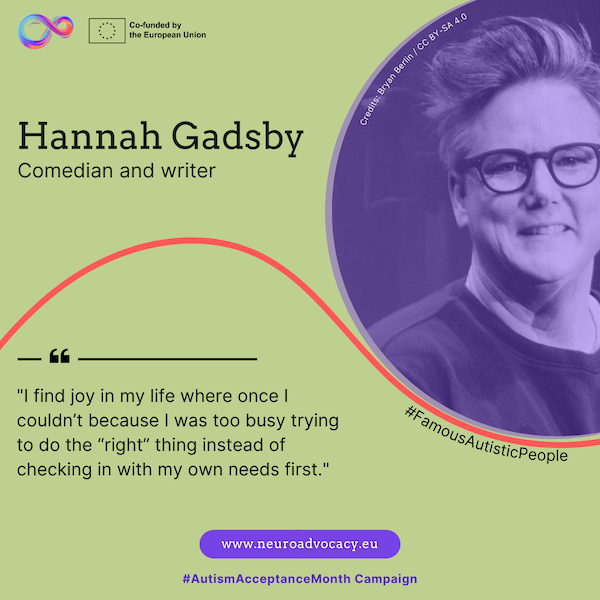
Hannah Gadsby

Hannah Gadsby is an award-winning comedian and writer, famous for her stand-up special Nanette. She was diagnosed with autism in her late 30s, and has used her platform to discuss her experiences with neurodivergence. 

“I find joy in my life where once I couldn’t because I was too busy trying to do the “right” thing instead of checking in with my own needs first.”

Hannah Gadsby’s quote highlights the importance of self-awareness and prioritizing personal needs over external expectations. 

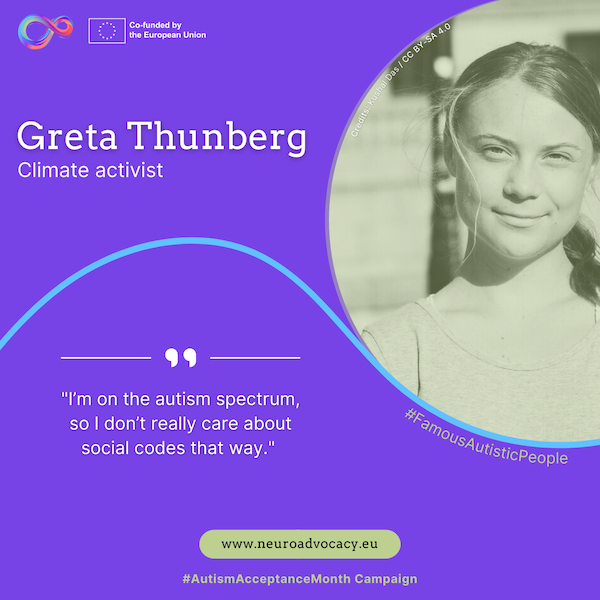
Greta Thunberg

Greta Thunberg, a Swedish climate activist, has been diagnosed with autism. She has used her platform to advocate for climate action, with her direct and uncompromising style resonating with people around the world. Thunberg has shown how autism can influence a person’s ability to focus intensely on a cause and persist in the face of challenges. 

“I’m on the autism spectrum, so I don’t really care about social codes that way.” 

Greta’s journey teaches us that neurodiversity brings strength, passion, and the ability to challenge the status quo. Her determination and focus are qualities that contribute to her ability to lead and inspire millions in the fight for climate justice. 

Stephen Wiltshire

Stephen Wiltshire is a British architectural artist known for his astonishingly detailed cityscape drawings, many created entirely from memory. Diagnosed autistic at age three, he found his voice through drawing before he learned to speak. Stephen’s work has been celebrated worldwide, showing how autistic ways of seeing and processing the world can be an incredible source of creativity and insight. 

“Do the best you can and never stop.” 

This quote reflects the autistic ability to harness deep focus and determination—often called “tunnel vision”—especially when driven by a special interest, allowing for powerful, sustained engagement with meaningful goals. 

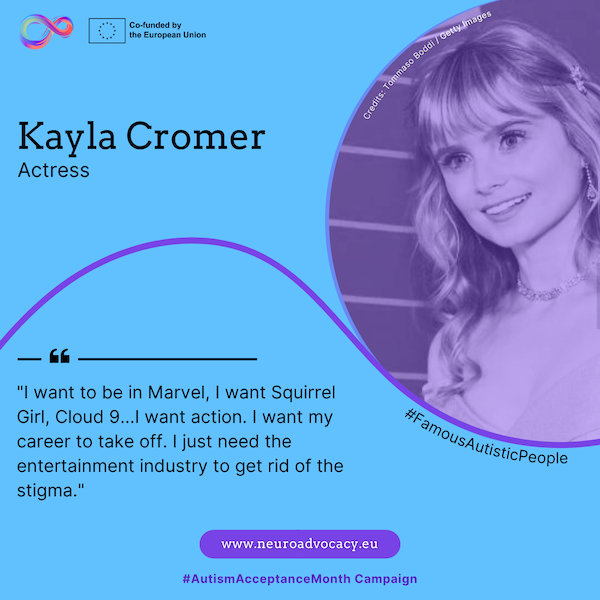
Kayla Cromer

Kayla Cromer is an actress known for her role in Everything’s Gonna Be Okay, where she plays a neurodivergent character. She is a vocal advocate for representation of autistic people in media. 

“I want to be in Marvel, I want Squirrel Girl, Cloud 9…I want action. I want my career to take off. I just need the entertainment industry to get rid of the stigma.” 

Kayla Cromer’s drive to take on ambitious roles shows that with opportunity and acceptance, neurodivergent individuals can thrive in any arena — including the spotlight. 

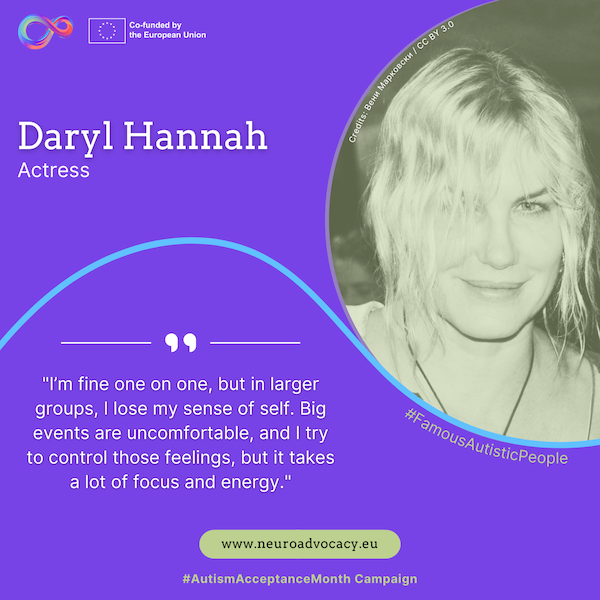
Daryl Hannah

Actress Daryl Hannah, known for roles in Splash, Blade Runner, and Kill Bill, has spoken publicly about her struggles with autism, particularly her social difficulties. Hannah has become an advocate for autism awareness, particularly focusing on the challenges autistic people face in social environments. 

“I’m fine one on one, but in larger groups, I lose my sense of self. Big events are uncomfortable, and I try to control those feelings, but it takes a lot of focus and energy.” 

Daryl Hannah’s quote illustrates the challenges of masking, where the effort to suppress natural reactions in social situations can be exhausting.Trying to conform to societal expectations in group settings can lead to emotional fatigue and a loss of self-identity. 

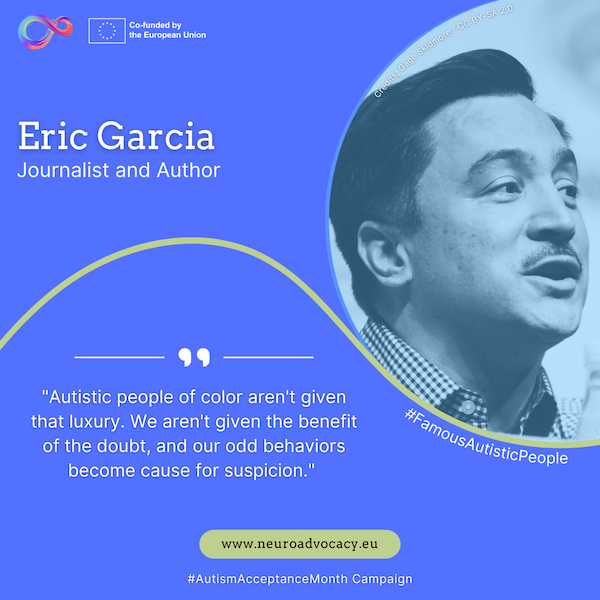
Eric Garcia

Eric Garcia is a Latino journalist and the author of We’re Not Broken: Changing the Autism Conversation. He is dedicated to shifting the narrative around autism, focusing on the strengths and potential of neurodivergent individuals. 

“Autistic people of color aren’t given that luxury. We aren’t given the benefit of the doubt, and our odd behaviors become cause for suspicion.” 

Eric Garcia’s quote underscores how autistic people of color face the dual burden of racial bias and neurodivergent stigma, emphasizing the need for a more inclusive and intersectional approach to understanding autism. 

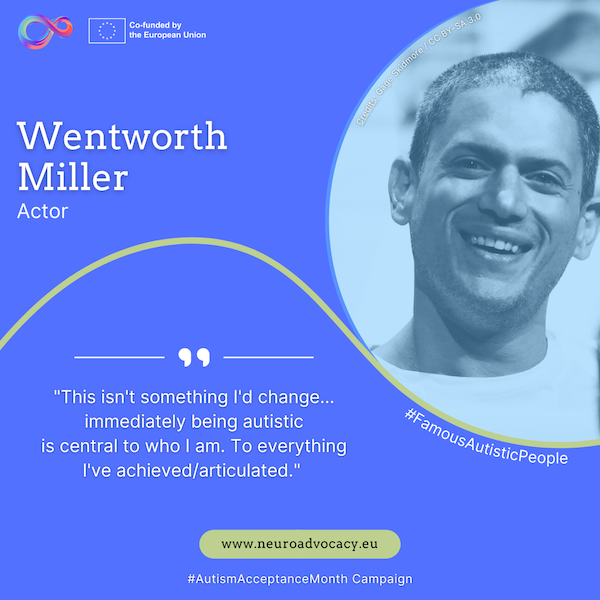
Wentworth Miller

Wentworth Miller is a renowned actor best known for his role in Prison Break. He publicly disclosed his autism diagnosis, aiming to reduce stigma and increase understanding of neurodivergence in Hollywood. 

“This isn’t something I’d change … immediately being autistic is central to who I am. To everything I’ve achieved/articulated.”

Miller’s declaration emphasizes that neurodiversity is an integral aspect of his identity, contributing significantly to his achievements and self-expression. 

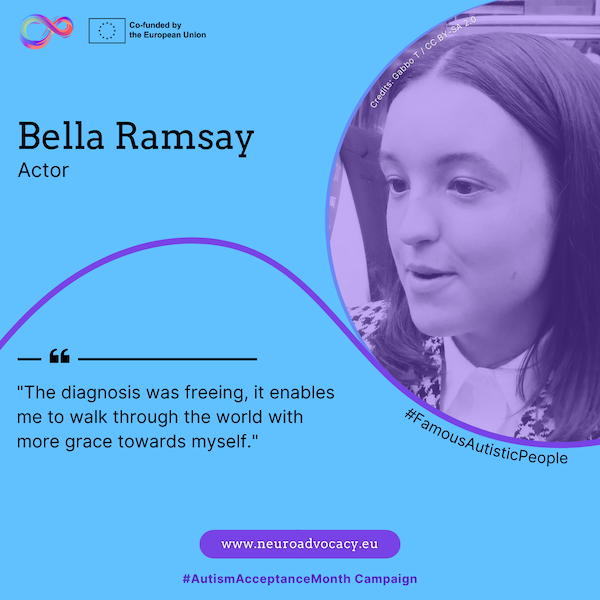
Bella Ramsay

Bella Ramsey is a British actor known for their roles as Lyanna Mormont in Game of Thrones and Ellie in The Last of Us. They identify as non-binary and have publicly shared that they have autistic traits and ADHD. Bella has been an important voice for authenticity and self-acceptance, advocating for greater diversity in the entertainment industry. 

“The diagnosis was freeing, it enables me to walk through the world with more grace towards myself.” 

Embracing our differences is a strength, and diversity enriches every field of society.

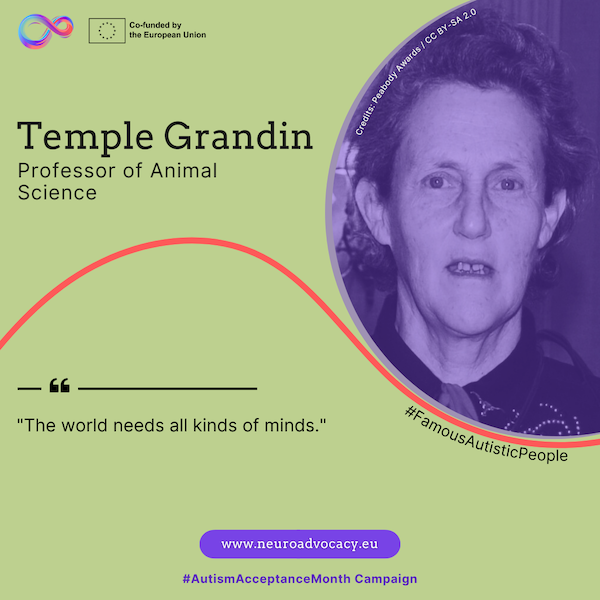
Temple Grandin

Temple Grandin is a professor of animal science at Colorado State University and one of the most prominent autistic persons. She is known for designing livestock handling facilities and her groundbreaking work on autism. Grandin’s ability to think in pictures has inspired a new understanding of the autistic mind.  

“The world needs all kinds of minds.” 

Temple Grandin’s life and work showcase how people on the autism spectrum, with the appropriate support, can contribute in unique and powerful ways. This quote emphasizes the value of different ways of thinking and the importance of embracing diversity in cognition. 

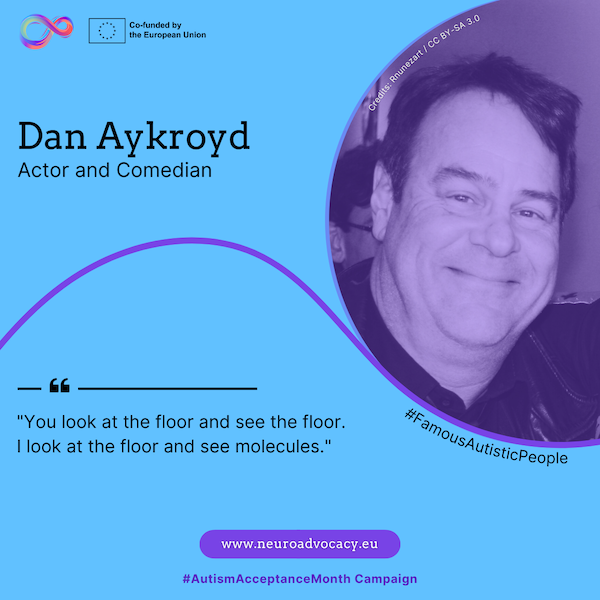
Dan Aykroyd

Actor, comedian, and musician Dan Aykroyd, best known for his roles in Ghostbusters and The Blues Brothers, has spoken openly about his autism diagnosis. Aykroyd has used his platform to raise awareness about autism while continuing to excel in his career. 

“You look at the floor and see the floor. I look at the floor and see molecules.” 

Dan Aykroyd’s unique perspective shows how neurodivergent ways of seeing, feeling and thinking can fuel creativity and innovation. His contributions to pop culture demonstrate that embracing cognitive diversity leads to richer, more inclusive communities. 

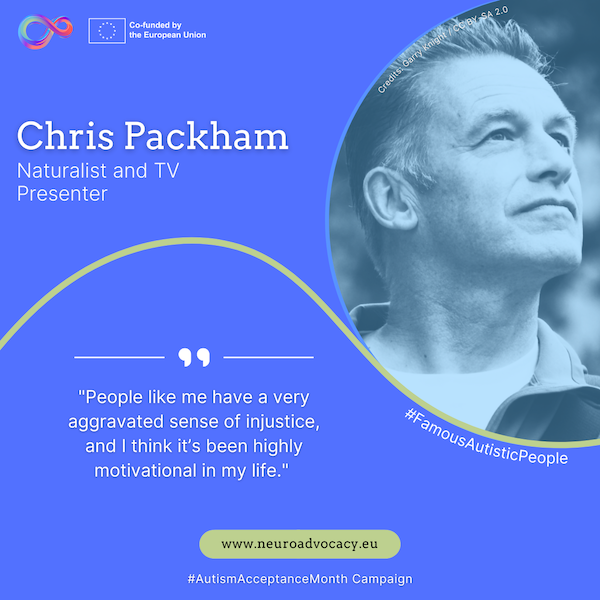
Chris Packham

Chris Packham is a British naturalist, television presenter, and environmentalist. He has been open about his autism diagnosis and has advocated for increased understanding of autism. His work in wildlife conservation has earned him international recognition, and he uses his platform to promote autism acceptance. 

“People like me have a very aggravated sense of injustice, and I think it’s been highly motivational in my life.” 

Chris Packham’s words highlight how traits often associated with autism, such as a strong sense of justice, can be powerful motivators. Instead of seeing these traits as limitations, we can recognise them as driving forces behind meaningful action and advocacy. 

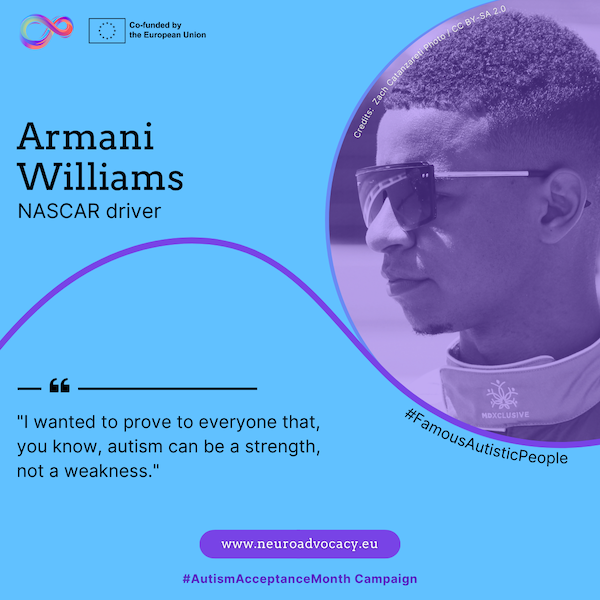
Armani Williams

Armani Williams is a professional NASCAR driver and the first openly autistic driver in the sport. Diagnosed with autism at the age of two, he has used his platform to advocate for autism awareness and inclusion in motorsports. He aims to inspire others by showing that neurodivergent individuals can thrive in any field, including high-performance sports. 

“I wanted to prove to everyone that, you know, autism can be a strength, not a weakness.” 

While autism can come with real challenges, Armani Williams’ story shows how embracing neurodivergence can also be a source of strength — and how shifting perspectives helps break harmful stereotypes. 

Declaração de exoneração de responsabilidade: Financiado pela União Europeia. No entanto, os pontos de vista e opiniões expressos são da exclusiva responsabilidade do(s) autor(es) e não reflectem necessariamente os da União Europeia ou da Agência de Execução relativa à Educação, ao Audiovisual e à Cultura (EACEA). Nem a União Europeia nem a EACEA podem ser responsabilizadas pelos mesmos. 
Subscreva para receber notícias da APVA no seu e-mail
Copyright © 2024 Associação Portuguesa Voz do Autista. Todos os Direitos Reservados. .